
The Flipper Project: Automating Precision Measurement
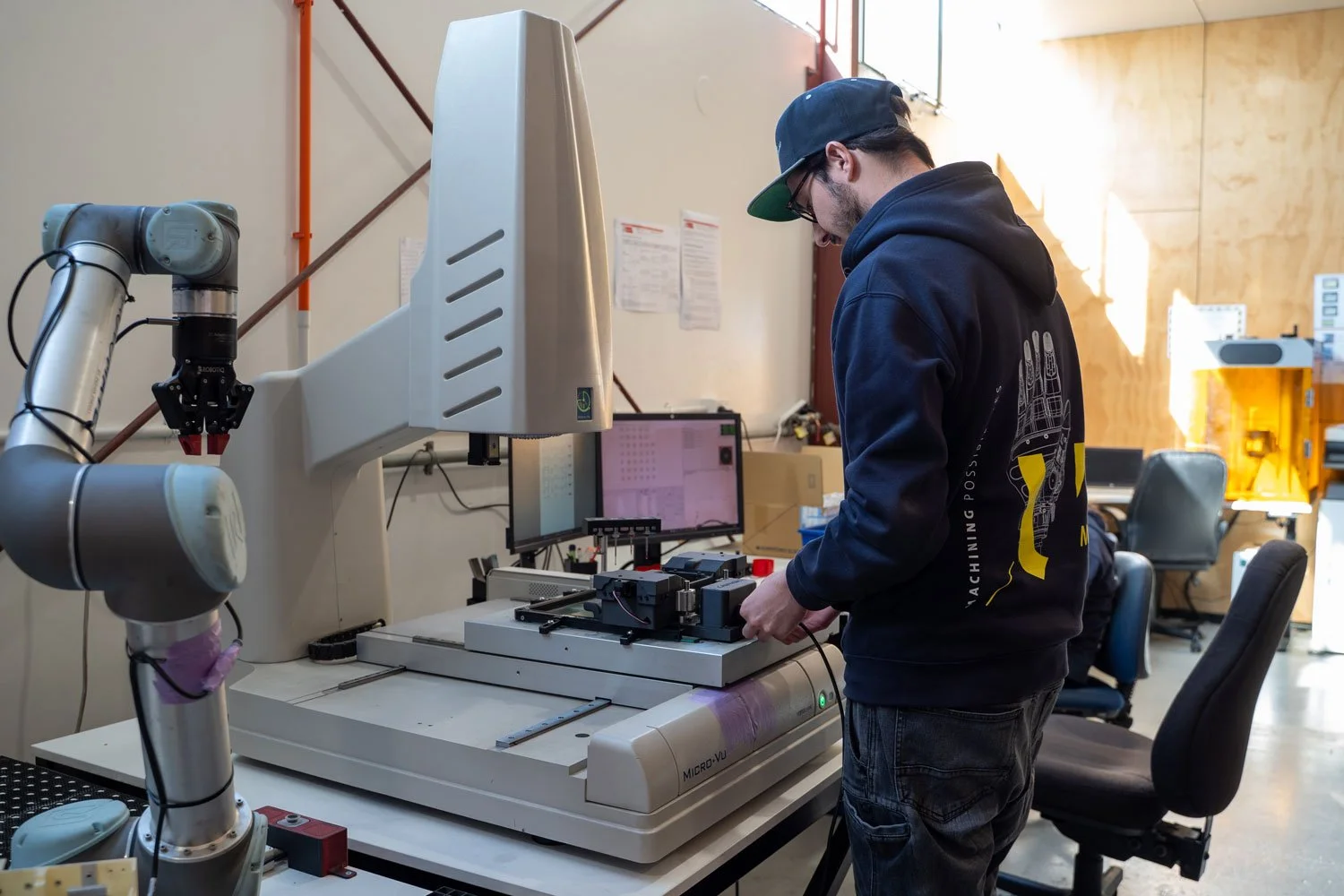
With a team of natural problem solvers at United Machinists, there's no shortage of ideas for improving workflow and applying automation where it can make a real difference. The Flipper Project is a perfect example of exactly that.
United's clients across the aerospace, aviation, medical, electronics and other precision manufacturing sectors demand extremely tight tolerances. To meet those standards, measurement and quality inspection are a critical part of the machining process.
The challenge is the time that the measurement process demands. Even with our UR Cobot working with our Micro-VU Vertex 312 HC handling the automated measurement process, someone still needed to be present to monitor and physically flip each part at the right moment, allowing the full inspection to be completed on all faces.
That's where the idea for the Flipper Project was born: a purpose-built piece of equipment that could work alongside the existing robotic and measurement setup to flip each part automatically, exactly when needed.
The concept for the Flipper was first developed by a previous staff member who built an early working prototype. When Jared Sim, Quality Inspection Manager, took over ownership of the project, he inherited that foundation and immediately set about making it as great as it could be.
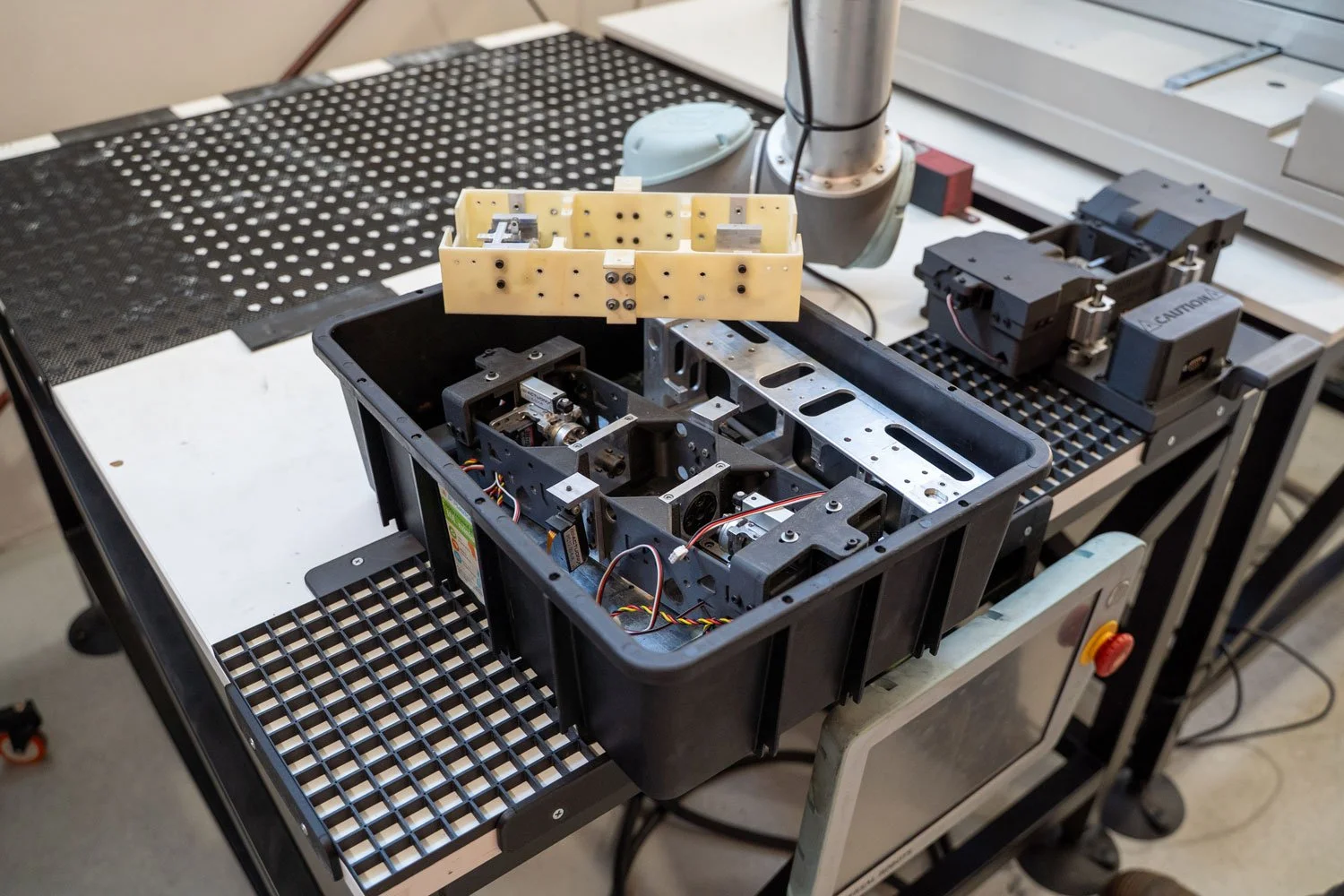
The development of the Flipper went through several phases. The original prototype was a fully machined metal casing, which was strong but heavy. The following versions introduced plastic components alongside the metal, reducing weight while maintaining the same design. Eventually, Jared then completely redesigned the Flipper as a fully 3D-printed model that is lighter and contains all the components in a tidy package. Along the way, the Flipper's overall footprint was refined, and additional motors were added to expand its functionality.
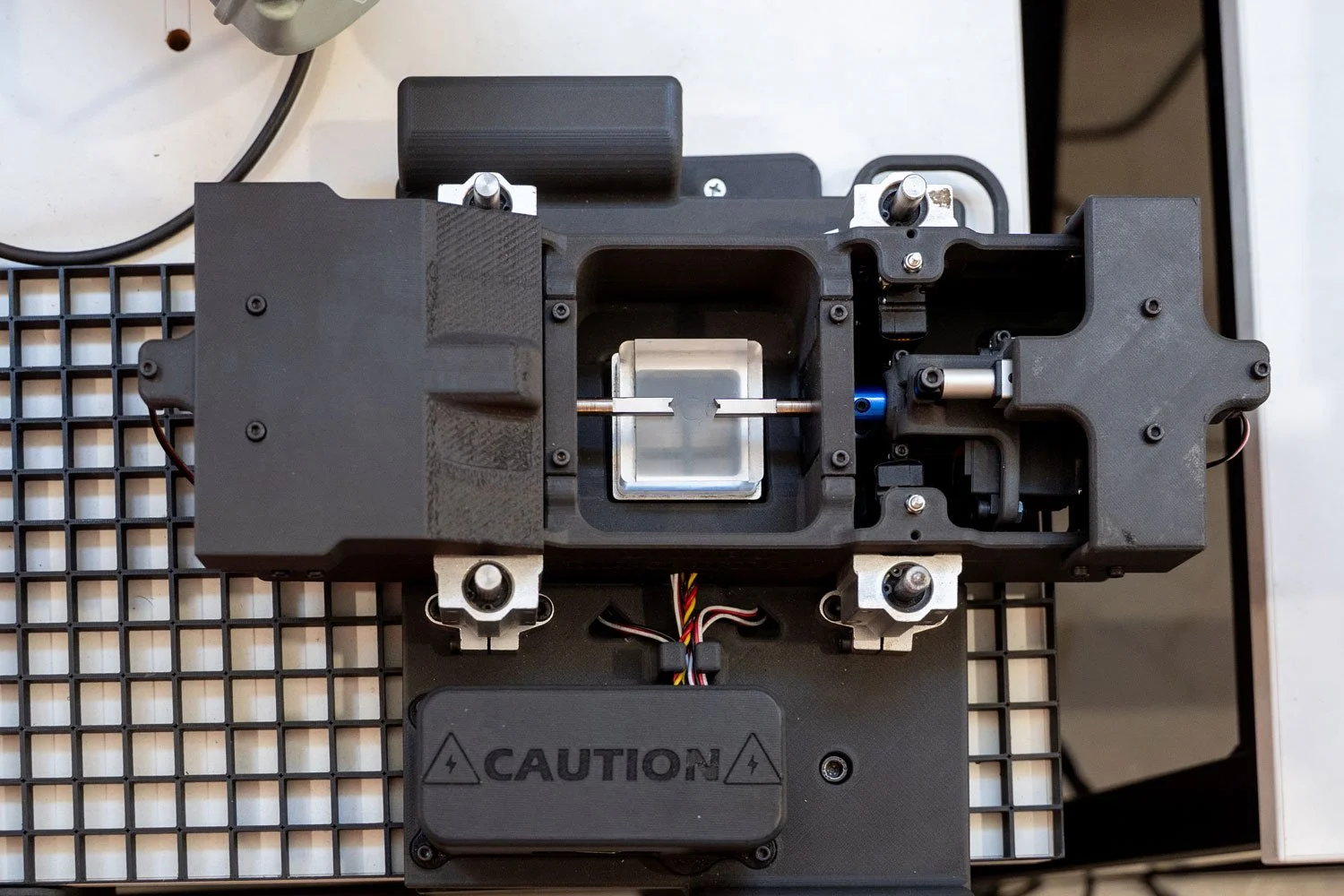
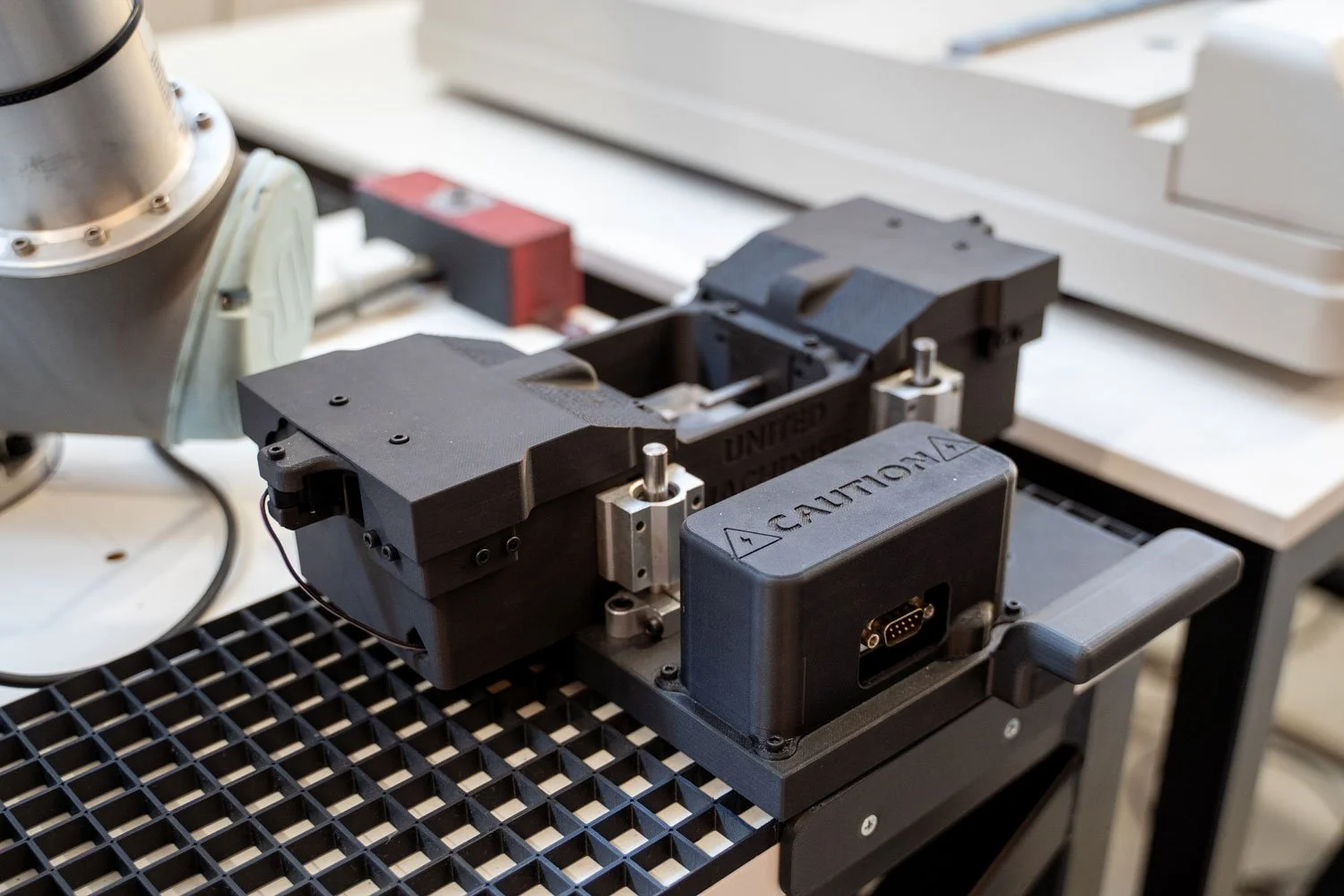
Alongside the physical redesign, Jared wrote the Flipper's entire code from scratch. At its peak, this code reached over 50,000 lines. Jared then worked to compress and optimise this code until it reached around 500 lines.
The finished Flipper is designed to move parts freely up and down, working in sync with the UR Cobot and the Micro-VU Vertex 312 HC to carry parts through a fully automated measurement process. The Flippers' interchangeable base allows a range of differently shaped parts, and the entire system is programmed to run without operator input once the work is started.
Because the Flipper was designed and built entirely in-house, United isn't reliant on an external supplier to maintain or improve it. Jared understands every component and every line of code.
The journey from heavy metal prototype to lightweight 3D-printed tool, and from 50,000 lines of code to 500, reflects a commitment to getting things right rather than just getting them done.
For clients, this project translates to real outcomes. Faster measurement cycles reduce the time parts spend in inspection without compromising precision. Jobs move through the shop more efficiently, and turnaround times improve while quality stays exactly where it needs to be. That’s the point of the Flipper Project. Not automation for its own sake, but a smarter process that delivers better results for the people relying on United Machinists to get it right.